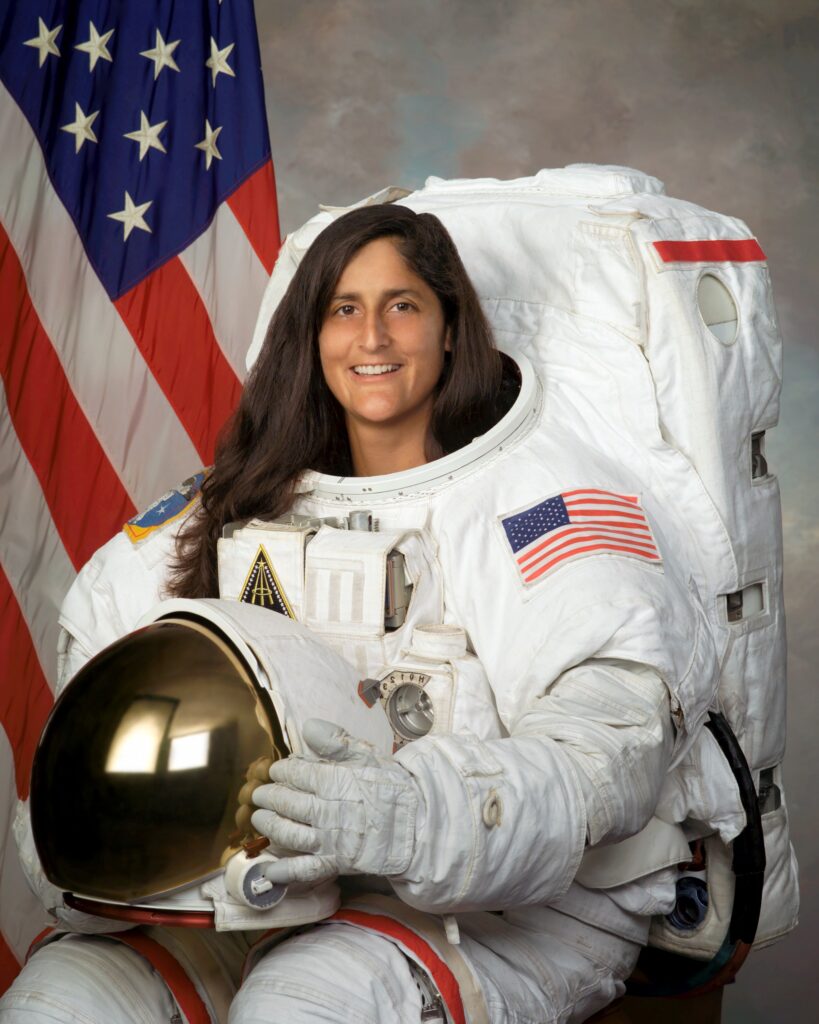
NASA astronaut Sunita Williams has returned to Earth after an unexpectedly extended mission aboard the International Space Station (ISS). Initially planned as a short-duration trip, her stay stretched beyond nine months due to unforeseen technical challenges with Boeing’s Starliner spacecraft. Her journey not only tested the limits of human endurance but also reinforced the importance of adaptability in space exploration.
Mission Beyond Its Timeline
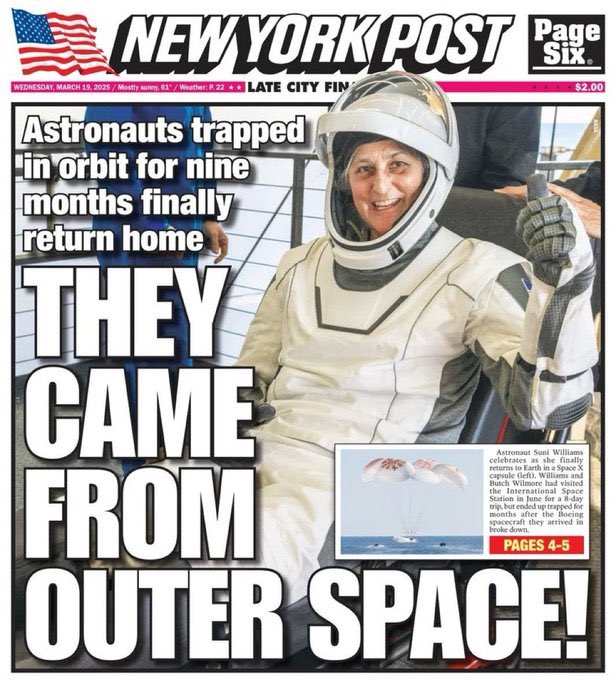
Williams, along with fellow astronaut Barry “Butch” Wilmore, launched aboard Boeing’s Starliner on June 5, 2024, as part of its inaugural crewed test flight. The original plan was for an eight-day stay, but multiple technical malfunctions, including helium leaks and thruster issues, led to an extended mission. This unexpected delay highlighted the challenges of relying on new spacecraft technologies in human spaceflight.
A Safe Return Against the Odds
After months of careful assessment by NASA and Boeing engineers, Williams and Wilmore finally returned to Earth on March 18, 2025. However, due to concerns over Starliner’s reliability, they made their reentry using SpaceX’s Crew Dragon capsule, splashing down safely in the waters off Florida. This shift in return strategy demonstrated the significance of having multiple operational space transport systems in place.
Pioneering Research in Microgravity
Despite the mission’s unexpected extension, Williams and Wilmore made significant contributions to scientific research aboard the ISS. They conducted studies on the effects of long-term microgravity on the human body, performed maintenance tasks essential for ISS operations, and assisted in experiments that could pave the way for future Mars and Moon missions. Their extended presence provided unique data on how astronauts adapt to prolonged space conditions, offering valuable insights for deep-space exploration.
A Hero’s Welcome Back on Earth
Williams’ return was celebrated globally, especially in her father’s ancestral village of Jhulasan, Gujarat, India. The community, along with space enthusiasts worldwide, lauded her resilience and contributions to space science. Her journey continues to inspire aspiring astronauts and researchers, proving that persistence and courage define the essence of space exploration.
The Road Ahead for Space Missions
Her extended mission serves as a case study in endurance and crisis management in space travel. As NASA and private space companies gear up for upcoming deep-space missions, including Artemis lunar expeditions and future Mars missions, Williams’ experience will serve as an invaluable reference for preparing astronauts for prolonged stays in space.Williams’ story is one of determination, adaptability, and scientific achievement. Her contributions not only shape the future of human spaceflight but also serve as a beacon of inspiration for generations to come. Stay tuned for more updates on space exploration and astronaut achievements!